
Music Rhythm Battle Night
HOLA GAMEMusic
4.4431.00 Reviews
- Version
- 1.3.1
- Installs
- 1.00M
- Age Rating
- Teen
Screenshots
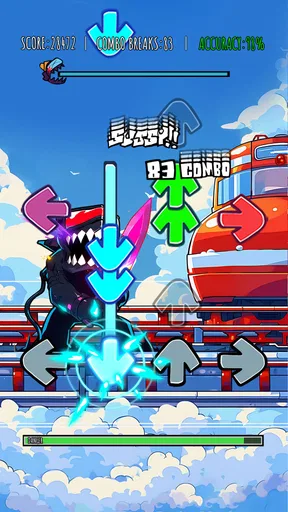
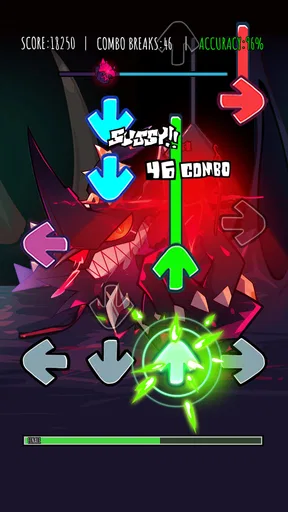
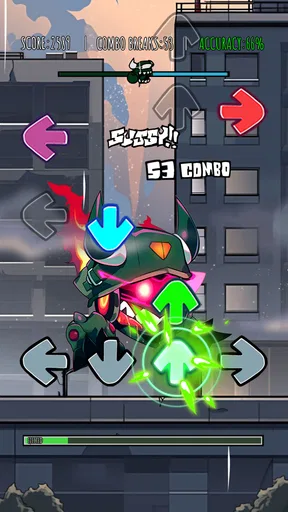
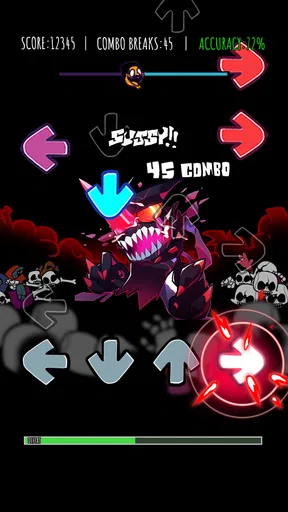
Our Review of Music Rhythm Battle Night
 Analysis by Appyee
Music Rhythm Battle Night is the kind of mobile game I open when I want something musical but do not have time to learn a full song or settle into a long session. It is a rhythm game from HOLA GAME, built around reacting to the beat and turning that reaction into thumb movements. The idea is easy to understand, but the timing gives it enough pressure to make even a short attempt feel like a small challenge.
I found the appeal strongest when I treated it as a quick concentration game rather than as a replacement for a music player or a deep rhythm-training tool. The store summary describes following the beat with your thumbs, and that is a fair description of the central experience: listen, watch, react, and try to stay with the musical flow. It is free to start, rated Teen, and available for devices running Android 7.0 or later, which makes it approachable for many people with older phones as well as newer ones.
What the first session feels like
The first thing to understand is that Music Rhythm Battle Night is not asking you to passively listen. Your attention is split between the soundtrack and the visual cues that tell you when to move. That combination creates a useful tension: if I stare only at the screen, I can lose the musical pulse, but if I focus only on the sound, I may miss what the game is asking my thumbs to do.
That balance is also why the game can feel more demanding than its simple premise suggests. A song may seem comfortable during the opening moments, then a faster sequence or a less familiar pattern exposes whether I am actually following the beat or merely guessing. My best results came when I stopped trying to rush and instead settled into the rhythm before worrying about a perfect run.
For a first-time player, the most reassuring expectation is that early mistakes are useful. They show whether the problem is timing, divided attention, or simply unfamiliarity with the control pattern. I would not judge the game after one awkward attempt. Rhythm games often feel strange until the eyes, ears, and thumbs begin working together, and this one benefits from a few calm retries.
The music category is important here because the soundtrack is not just decoration. It sets the pace of the interaction and changes how quickly I need to process what appears on screen. Players who enjoy tapping along to music, testing reflexes, or chasing a cleaner performance will probably understand the attraction quickly. Players looking for a story, exploration, or a relaxed idle experience should know that the main reward comes from active timing.
Starting without overthinking the controls
When I first launch a rhythm game, I usually want to know three things immediately: where to begin, what counts as a successful input, and whether I can retry without losing progress. Music Rhythm Battle Night is easiest to approach when I focus on the immediate playable task instead of trying to understand every option at once. I recommend beginning with the most accessible song or stage presented to you, then treating the first attempt as a calibration run.
Keep your phone steady and use a grip that leaves both thumbs relaxed. This sounds minor, but tense hands make late taps more likely, especially when a sequence becomes busy. I also prefer playing with the device at a comfortable angle rather than holding it flat against a table. That gives me a clearer view of the cues without forcing my wrists into an awkward position.
Sound matters more than many new players expect. If you can play somewhere reasonably quiet, do so. The beat helps me anticipate movement, while visual prompts confirm the exact moment. In a noisy room, I tend to react to the picture alone, and that makes the game feel less natural. Headphones can help if they are comfortable, but I would not treat them as essential equipment; the important point is being able to hear the musical pulse clearly.
My first practical tip is to learn the rhythm before chasing the score. On an opening attempt, I watch how the cues line up with the music and accept a few misses if necessary. On the next run, I already know where the song asks for concentration. This two-pass approach is more effective than repeatedly restarting after one mistake, because it turns the first failure into information rather than frustration.
Turning the first attempt into a meaningful success
A meaningful first success does not have to mean clearing everything flawlessly. For me, it means completing a section while feeling that my inputs came from the beat rather than panic. That distinction matters. A lucky sequence of taps may produce a better result once, but understanding the timing gives me something I can repeat.
I suggest choosing one short-term target at a time. First, try to reach the end of a playable section. Then work on reducing missed inputs. Only after that would I focus on improving the overall result. Trying to solve all three goals at once usually makes me tense, and tension is especially damaging in a game that depends on consistent timing.
One useful workflow is to identify the exact moment where a run starts to fall apart. Instead of thinking, “I am bad at this song,” I ask whether the trouble begins during faster cues, after a change in musical intensity, or when I have to move my thumbs in an unfamiliar way. That narrower diagnosis makes the next attempt more productive. I can prepare for one difficult passage instead of replaying the entire session without a plan.
Another small adjustment is to avoid tapping harder than necessary. Forceful taps do not improve timing, and they can slow down the next movement. Light, deliberate touches keep my hands available for the following cue. This is one of those details that is easy to miss in a store description but becomes obvious after several attempts: rhythm performance is partly about conserving movement.
If you are introducing the game to someone who does not normally play rhythm titles, I would let them watch one attempt before handing over the phone. Seeing the relationship between the soundtrack and the visual prompts removes some of the mystery. I would also encourage them to finish a run even after a mistake. Stopping immediately teaches the wrong lesson, while continuing shows how the game responds to imperfect play and makes the next try less intimidating.
Where new players can get confused
The biggest source of confusion is the difference between seeing a cue and being ready for it. Beginners often react when the symbol becomes visually obvious, but that may already be slightly late. I had better results when I watched the path toward the target area and prepared my thumb before the final moment. The game rewards anticipation guided by the beat, not frantic movement at the last second.
It is also easy to mistake a difficult passage for a problem with the phone. Before blaming the device, I check whether my hands are covering part of the screen, whether the display is moving because I am holding it loosely, and whether background noise is masking the rhythm. These simple factors can make timing feel inconsistent even when the real issue is the playing setup.
Another common mistake is changing technique every time a run goes wrong. I used to move my grip, alter my posture, and tap more aggressively all at once. That made it impossible to know what had helped. A better method is to change one thing per attempt: sit closer, listen more carefully, relax the thumbs, or focus on the upcoming cue. This turns retries into a basic experiment instead of a series of guesses.
The word “battle” in the title may also lead some players to expect a large competitive system or a traditional fighting game. I would approach it first as a music rhythm challenge. The satisfaction comes from matching the beat and improving control, not from assuming that the game will deliver the structure of a strategy battle or an action campaign. That expectation makes the opening experience much clearer.
There is a practical financial point as well. The game is free to download, while optional in-app purchases range from $1.99 to $2.99 per item. I would begin without spending anything and decide later whether the extra purchases add enough value for the way you play. Someone who only wants occasional musical breaks can reasonably keep the experience free. A committed player may consider an optional purchase differently, but I would not make that decision before understanding the basic loop.
The Teen content rating is another reason I would not assume the game is aimed at very young children. Parents should check the store presentation and the device settings they normally use for games, particularly if a child will be playing independently. For adult players and older teenagers, the rating is a useful reminder to treat the title as a teen-oriented game rather than a preschool music toy.
How it fits into an ordinary day
I can see Music Rhythm Battle Night working well during a short break between tasks. Imagine waiting for a friend, taking a pause after studying, or sitting on public transport with enough attention for a few attempts. I would play one run, notice where my timing slipped, and use the next run to correct that specific passage. That gives the session a clear beginning and end instead of turning a break into an unplanned hour.
It is less suitable when I am already tired or distracted. Rhythm games are not especially forgiving when my attention is divided, and the music can become irritating if I keep replaying the same difficult section without resting. I get more from it when I stop after a few unfocused attempts and return later. A short pause often helps more than forcing another run with tense hands.
The game can also serve as a light coordination exercise, although I would not describe it as formal training. It asks me to process sound and movement together, which is satisfying for anyone who likes reactive challenges. Still, players seeking structured lessons for musical instruments should choose a dedicated learning app instead. This title is about performance inside the game, not about teaching music theory, reading notation, or practicing an instrument.
Comparison with familiar rhythm-game alternatives
Compared with a traditional music player, this game is much more demanding but also more interactive. A music player lets me relax and listen without interruption; Music Rhythm Battle Night asks me to participate. I choose the game when I want the beat to guide an action, not when I want background sound while working.
Compared with a deep rhythm title built around extensive customization, long-term progression, or a large competitive community, this is easier to approach as a quick mobile challenge. That simplicity is a strength for first-time players because there is less pressure to master a complicated system before enjoying the music. The trade-off is that experienced rhythm-game fans may want more depth, more variety, or more ways to personalize the experience than this compact format provides.
It also differs from casual tap games that use music only as a loose theme. Here, timing is the point of the interaction. If the beat and your thumb movements are out of sync, the experience immediately feels wrong. That makes it more rewarding for players who genuinely listen while playing, but less appealing to anyone who prefers to tap randomly and still make steady progress.
Who should install it and who should skip it
I would recommend Music Rhythm Battle Night to someone who wants a free music game that can be understood quickly and improved through repetition. It is a good match for players who enjoy short sessions, visual timing challenges, and the feeling of turning a song into a physical pattern. Its audience is not limited to expert rhythm players; beginners can start by learning one passage at a time.
I would be more cautious about recommending it to someone who dislikes repeated attempts. The game’s pleasure comes from noticing a mistake, adjusting, and trying again. If that loop feels repetitive rather than motivating, the music alone may not be enough to hold your interest. I would also point fans of story-heavy games, open exploration, or strategic planning toward another category entirely.
Device compatibility is straightforward for many Android users because the minimum requirement is Android 7.0. The current release is version 1.2.9, so I would check that your installation has updated properly before judging performance or controls. I would also make sure the phone has enough battery for a focused session and keep the screen clean; rhythm inputs are sensitive to how confidently I can see and touch the play area.
The game’s audience appears substantial, with over one million installs and an average rating of 4.4 from around eleven thousand ratings. Those figures suggest that the basic concept connects with many players, but they should not replace your own preferences. A popular rhythm game can still be the wrong choice if you need a quiet listening experience, dislike retries, or want a more elaborate progression system.
What I would do after the first successful run
Once I had completed an early section comfortably, I would resist the temptation to jump randomly between every available option. I would choose one track or challenge and build familiarity with it. Repetition is more useful when the goal is specific: improve the troublesome transition, keep the thumbs relaxed, or finish with fewer missed cues.
I would also vary the time of day. A song that feels easy when I am alert may feel surprisingly difficult late at night. That is not necessarily a flaw in the game; it shows how much rhythm performance depends on concentration. If I wanted a fair comparison between attempts, I would play under similar conditions and avoid judging progress based on one distracted session.
For players considering purchases, my advice is to wait until the free experience has answered two questions: Do you enjoy the core timing, and will you return often enough to justify spending? Since individual in-app items cost between $1.99 and $2.99, a small purchase may be reasonable for a regular player, but it is unnecessary for someone still deciding whether rhythm games are enjoyable at all.
HOLA GAME has kept the premise easy to grasp, which is exactly what helps a first-time user reach the first meaningful success. The game does not need a long explanation before the central action makes sense. Its challenge comes afterward, when I try to replace hurried reactions with controlled timing and learn how each musical passage asks me to move.
My recommendation after spending time with it
Music Rhythm Battle Night works best as a focused, beat-driven break. I like that I can understand the objective quickly, start without paying, and improve through practical changes rather than complicated preparation. The strongest moments come when the visual cues, the soundtrack, and my thumbs line up so naturally that I stop thinking about each individual input.
Its limitations are just as clear. It is not a substitute for a music-learning tool, a passive listening app, or a large story game. Repetition can become tiring, and players who need extensive systems may outgrow the straightforward format. The optional purchases also deserve a measured approach: enjoy the free core first, then decide whether additional spending fits your habits.
My final advice is to give it several calm attempts, use headphones or a quiet room when possible, and treat the first run as practice rather than a verdict. Focus on one difficult passage, relax your thumbs, and let the beat set the pace. If that process sounds satisfying, this is a welcoming way to try a mobile music rhythm game. If you want music without interaction or a much deeper competitive structure, another option will suit you better.
For me, the game earns its place as a quick reflex challenge because it turns a familiar musical idea into something I actively perform. I would recommend it to a friend who wants short sessions and does not mind learning through retries. The best reason to install it is simple: when the timing finally clicks, even a brief attempt feels like a small, earned success.
Privacy and Permissions
See what permissions an app requests and how it handles your data.
- Location
- approximate location (network-based)
- Wi-Fi connection information
- view Wi-Fi connections
- Other
- view network connections, pair with Bluetooth devices, access Bluetooth settings, connect and disconnect from Wi-Fi, full network access, control vibration, prevent device from sleeping
Verdict
Strengths of Music Rhythm Battle Night
- Fast rhythm battles make short play sessions engaging.
- Simple controls are easy for newcomers to understand.
- Multiple tracks help keep the gameplay from feeling repetitive.
- Timing challenges provide a satisfying sense of progress.
- Bright visuals and character animations add personality.
Limitations of Music Rhythm Battle Night
- Higher difficulty can feel frustrating when timing windows get tight.
- Some songs may become repetitive after extended play.
- Progress may depend heavily on memorizing recurring patterns.
- Visual effects can make notes harder to follow on small screens.
- The game may offer limited appeal beyond its rhythm battles.
Other Releases by HOLA GAME
View All
Music Beat Night Show
Music4.6

Beat Shooter Night: Rap Battle
Music4.2

Full Mod Rap Battle Night
Music4.1

Rap Beat Battle - Full Mods
Music4.2
Similar Picks in This Category
View All
Tiles Hop Music & Ball Game
AMANOTES PTE. LTD.4.3

Magic Tiles 3™ - Piano Game
AMANOTES PTE. LTD.4.6

Real Piano
Bilkon3.7

Piano Game: Classic Music Song
Dream Tiles Piano Game Studio4.0

Smash Colors: Music Ball Rush
BADSNOWBALL HONGKONG LIMITED4.2

Piano Music Go-EDM Piano Games
Joy Journey Music Games4.5
Frequently Asked Questions
What is Music Rhythm Battle Night?
Music Rhythm Battle Night is a rhythm-based music game in which you follow on-screen notes and tap, hold, or swipe in time with the beat. It combines fast musical challenges with battle-style gameplay, colorful visuals, and progressively harder songs. The main appeal is improving your timing and accuracy while competing through different stages and trying to achieve higher scores.
How do you play Music Rhythm Battle Night?
Gameplay is based on matching your actions to incoming notes as they reach the target area. Players need to react quickly and maintain accurate timing, since missed notes can reduce the score or affect the outcome of a battle. The controls are generally easy to understand, but later levels demand concentration, quick reflexes, and practice, especially when songs become faster or introduce more complex note patterns.
Is Music Rhythm Battle Night free to download and play?
Music Rhythm Battle Night can generally be downloaded without an upfront purchase, although the exact monetization system may vary depending on the version and platform. Players should check the store listing before installing to see whether the game includes advertisements, optional purchases, energy limits, or unlockable content. These details are important if you prefer a completely uninterrupted rhythm-game experience.
Does Music Rhythm Battle Night require an internet connection?
Some parts of Music Rhythm Battle Night may work offline, particularly previously available songs or basic gameplay modes, but an internet connection can still be needed for advertisements, updates, cloud features, rankings, events, or additional content. Before relying on offline play, it is best to test the game after installation with mobile data and Wi-Fi disabled, because requirements can differ between versions.
Is Music Rhythm Battle Night suitable for all ages?
The game is generally accessible to players who enjoy music and casual rhythm challenges, but parents should review the store rating and content information before allowing younger children to play. Advertisements, optional purchases, online features, or fast-paced visual effects may be present. The difficulty can also become demanding, so the experience is best suited to players comfortable with repeated attempts and reflex-based gameplay.
Play our best games!


